Military Buyer Guide
The VA Loan Is More Flexible Than Most Veterans Realize
Five options buyers often overlook, from duplexes and condos to keeping your last house and building new.
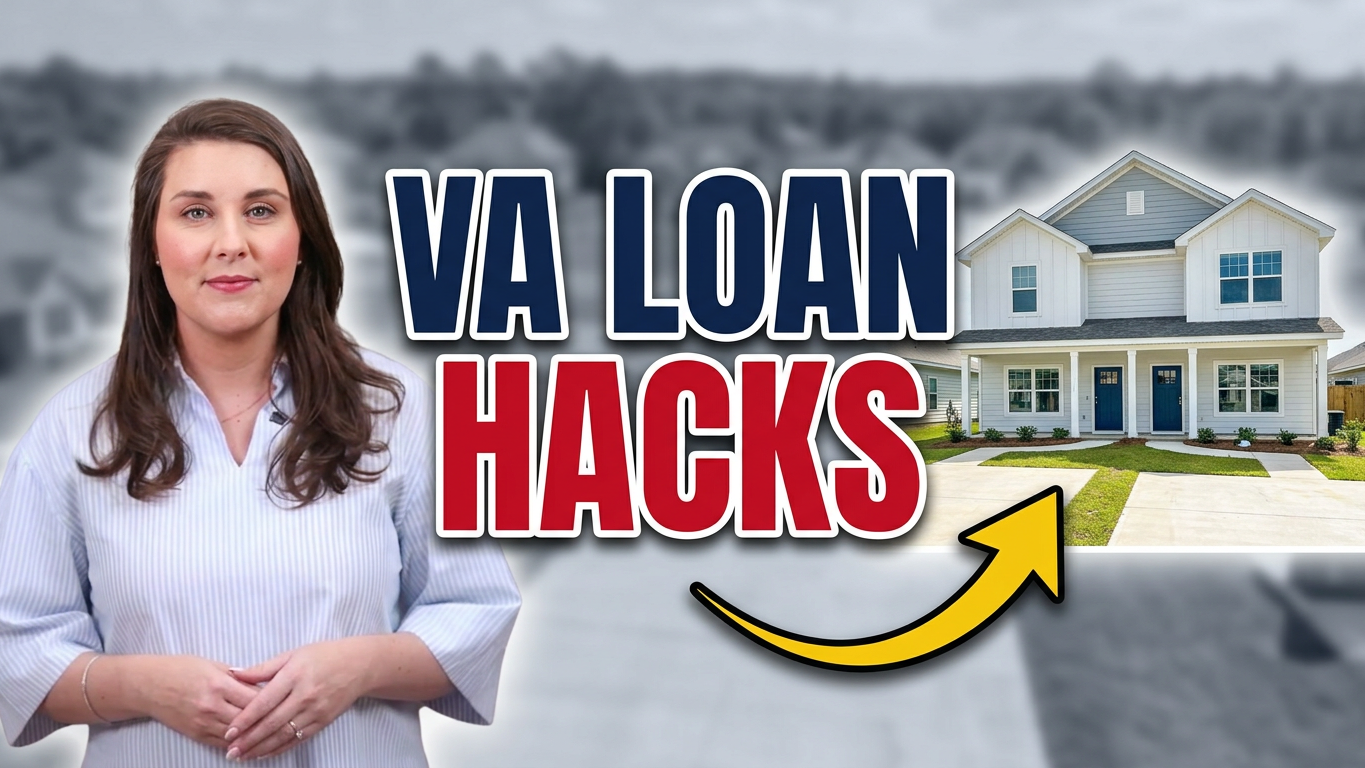
One of the strangest things about the VA home loan benefit is how many veterans qualify for it without ever really being taught what they can do with it.
Most people know the headline. You served, you may be eligible for a VA loan, and you may be able to buy a house without a down payment. Somewhere along the way, that gets reduced to a very narrow picture of what a VA purchase is supposed to look like: find a traditional single-family house, finance it with zero down, live there until you sell it, and then maybe use VA again someday.
After more than a decade working with military families around Camp Lejeune, I can tell you that military life rarely fits neatly into a box. Fortunately, neither does the VA home loan program.
Service members get orders. Families move. People retire. A house that made perfect sense at one duty station becomes a rental after the next PCS. A veteran may want to buy a duplex instead of a traditional single-family home. Someone else may want new construction, a condo or even to build a home from the ground up. The VA program accommodates far more of those situations than many veterans realize.
There's an important caveat running through almost everything I'm about to explain. Just because VA permits something doesn't mean every lender offers it. I wish more veterans understood that distinction, because I've watched buyers abandon perfectly legitimate VA options after calling one lender that didn't offer a particular product.
Sometimes "you can't do that with VA" really means "we don't do that here."
Those are very different answers.
Here are five areas where I think veterans often underestimate what their VA benefit can actually do.
"VA Is Really Just for Buying a Traditional Single-Family House."
A single-family home is probably what most people picture when they think about a VA purchase, and a large share of VA buyers use the benefit that way. But it isn't the only kind of property VA allows.
VA's current purchase loan guidance says eligible borrowers may use a VA-backed loan to:
- Buy a home with up to four units
- Buy a condominium in a VA-approved project
- Buy a manufactured home and lot
- Build a home
- Buy a home and make improvements to it
- Make certain energy-efficient improvements
That's a much broader menu than "go find a three-bedroom house in a subdivision."
The practical reality is a little more complicated, which is where buyers benefit from having somebody involved who understands the difference between VA eligibility and lender appetite.
Take condominiums. VA financing can absolutely be used to buy a condo, but the condominium project generally needs to be approved for VA financing. That means we need to check the project instead of assuming every condo is automatically eligible. VA maintains condo approval information for exactly that reason.
Manufactured housing adds another layer. VA permits financing for qualifying manufactured homes and lots, but finding a lender willing to make that particular VA loan may be harder than finding one for a conventional site-built house. Property requirements also get more specific, and the details of how the home is titled and attached to the land matter.
None of that means the answer is no.
It means the answer may take more work.
That's a theme you'll hear from me repeatedly when we talk about VA financing. The easy thing for someone who doesn't understand a particular scenario is to tell the veteran it can't be done. The better response is to figure out whether VA actually prohibits it, whether the property qualifies, and whether we simply need a lender that offers that type of VA financing.
Those are three completely different questions.
"If I Still Own Another House, I Can't Buy My Next Home With VA."
We touched on this earlier in this series because it comes up so often, but it deserves a deeper explanation.
Military homeowners accumulate real estate in a way civilian homeowners often don't.
That isn't because everyone sets out to become an investor. Sometimes it happens almost by accident.
You buy a home near your first duty station. Three years later, orders come down and you're headed somewhere else. Maybe the market isn't great for selling. Maybe you have a 3% mortgage you hate to give up. Maybe the rental numbers work. Maybe you simply like the house and believe keeping it makes sense long term.
So you rent it.
A few years later, you're ready to buy another home, and somebody tells you that because the first house still has a VA mortgage, you can't use VA again.
That may be completely wrong.
VA specifically says veterans can, in many circumstances, keep an existing home and use remaining entitlement to buy another primary residence. VA reiterated that point in September 2026, explaining that a veteran with enough remaining entitlement, who otherwise qualifies with the lender and meets VA's occupancy requirements, may be able to get another VA-backed home loan even while the first one is still outstanding.
Whether that works for a particular buyer depends on the numbers. We need to know:
- How much entitlement was used on the existing VA loan
- How much remains available
- The applicable county loan limit when partial entitlement is involved
- The price of the new property
- Whether the borrower can qualify financially while carrying the existing obligations
In some cases, the veteran will still be able to buy without a down payment. In others, the remaining entitlement may mean some down payment is required. Sometimes entitlement may be eligible for restoration instead.
What I don't want anyone doing is stopping the analysis at:
"You already have a VA loan."
That isn't enough information.
This is one of those areas where my years around Camp Lejeune shaped how I look at VA financing, because keeping a previous duty-station home was hardly unusual. I've worked with military families whose real estate history stretched across multiple duty stations, and the financing conversation couldn't begin and end with whether they currently owned another property.
We had to understand what they owned, how it was financed, what entitlement remained and what they were trying to accomplish next.
That's the conversation I want to have with South Alabama veterans too.
"If I Buy the House With VA, I Can Never Turn It Into a Rental."
This misconception usually comes from a misunderstanding of VA's occupancy requirement.
VA purchase loans are meant to help eligible veterans and service members buy a home to live in. They aren't designed as zero-down financing for someone who wants to buy a pure investment property or a vacation house.
When you get the loan, you certify that you intend to personally occupy the property as your home. VA generally considers occupancy within 60 days of closing to be reasonable, although its guidance recognizes circumstances where a later date can be acceptable when there's a specific future event that will allow the veteran to move in.
What VA doesn't say is that you have to promise to live in that house for the rest of your natural life.
Those are very different rules.
Military life is probably the easiest example of why that distinction has to exist. A service member can legitimately buy a home intending to live there, occupy it as required, and then get orders somewhere else later.
The fact that the house later becomes a rental doesn't retroactively make the original VA purchase improper. VA's own loan guidance recognizes veterans who occupied VA-financed homes and later rented them after military transfers.
The key issue is intent and occupancy at the time of purchase.
If someone comes to me and says, "I found this great rental property in Mobile and I want to use my VA benefit to buy it, even though I'm never going to live there," that isn't what the VA purchase program is for.
If someone says, "I bought this as my home three years ago, I lived in it, and now I have orders and I'm thinking about keeping it as a rental," we're having an entirely different conversation.
That second scenario has played out in military markets forever.
It's also one reason the VA benefit can become part of a military homeowner's long-term wealth story. I'd never recommend keeping a property just because you can. Some houses make terrible rentals. Some military homeowners discover very quickly that being a landlord from another state isn't nearly as passive as somebody on TikTok suggested.
But when the property makes sense financially, the rental market is healthy and the owner is prepared for the responsibilities, a former primary residence can become a long-term asset after you move.
VA's occupancy requirement doesn't automatically prevent that.
"I Can't Use VA to Buy a Duplex, Triplex or Fourplex."
This may be one of the least understood opportunities in the entire VA program.
VA permits an eligible borrower to buy a residential property with up to four units, as long as the borrower intends to occupy the property as a home and the transaction otherwise meets VA and lender requirements.
In other words, a veteran could potentially buy a duplex, live in one side and rent the other.
The same basic idea can extend to a triplex or fourplex, assuming the property, financing and borrower all qualify.
For the right buyer, that can be incredibly interesting.
Instead of buying a traditional single-family home and carrying the entire housing expense alone, the veteran occupies the property as required while also owning additional rental units that may produce income.
That doesn't make the property free.
Please don't turn this into one of those social media videos where someone draws three boxes on a whiteboard and explains how you can "house hack your way to millions."
Multi-unit ownership comes with real responsibilities:
- You're living beside your tenants.
- You're responsible for maintaining more than one unit.
- Vacancies happen.
- Repairs happen.
- Insurance is different.
- Landlord responsibilities exist.
- You need to understand the rental market and make sure the numbers work without relying on fantasy assumptions.
The lender will also need to determine what rental income, if any, can be counted in qualifying the borrower, and lenders can have additional underwriting requirements for multi-unit properties.
Still, I think this is an option more veterans should at least know exists.
A young active-duty buyer who expects to stay in the area for several years may look at a duplex very differently after learning that VA financing can potentially be used for it.
A retiring veteran who wants to start building rental income might decide an owner-occupied multi-unit property fits their long-term plan better than a traditional house.
It won't be right for most people.
That isn't the point.
The point is that VA doesn't limit every borrower to the same three-bedroom, two-bath single-family home.
The benefit gives you options.
Our job is to know those options well enough to recognize when one actually fits.
"VA Doesn't Work for New Construction or Building a Home."
This is especially relevant in South Alabama, because we have a lot of new construction, and I've already heard versions of this misconception from buyers.
Yes, you can use VA financing to buy new construction.
You can also potentially use the VA home loan benefit to build a home. VA specifically lists both buying new construction and building a new home as eligible uses of the program.
The complication isn't that VA prohibits construction.
The complication is that construction financing is specialized, and many lenders that happily make an ordinary VA purchase loan don't offer VA construction-to-permanent loans.
VA itself acknowledges this. Its guidance for veterans considering construction financing says one of the first steps is finding a participating VA lender that actually offers a construction loan product, and that construction loans come with stricter qualifications and more documentation than an ordinary purchase mortgage.
That's a perfect example of the distinction I mentioned at the beginning of this article.
You call Lender A and ask whether you can use VA to build a house.
The loan officer says, "We don't do VA construction loans."
What you heard was:
"VA won't let me build a house."
What the loan officer actually said was:
"This company doesn't offer that product."
Those aren't remotely the same conclusion.
Buying a completed new construction home is typically much more straightforward. If you're looking at a completed or nearly completed home from a builder in South Alabama, VA financing can absolutely be part of that conversation, assuming the property and builder meet the applicable requirements and the lender approves the borrower.
VA also has builder registration requirements for certain new construction transactions, so there are extra steps on the builder side that we need to verify.
This is one of the reasons I don't want a VA buyer walking into a model home, talking only to the builder's sales rep and assuming whatever financing options are presented there are the only options available.
The builder's affiliated lender may have a fantastic VA program.
In communities where builders are offering big incentives, the affiliated lender may actually be very hard to beat, because the builder is effectively subsidizing the financing.
If so, use it.
But let's compare it. I want to know:
- The rate
- The APR
- Whether points are involved
- What closing costs the builder is paying
- Whether a temporary or permanent rate buydown is being offered
- What the total transaction looks like compared with another VA lender
That's especially relevant in communities like Bear Run in Saraland, where new construction and builder financing can compete directly with existing homes.
A veteran absolutely can buy new construction with VA.
Using VA doesn't mean you have to limit your search to 20-year-old resale houses.
The Bigger Misconception Is That VA Is a Narrow Loan Program
That may be the common thread underneath all five of these.
A lot of veterans know enough about the VA loan to know it can help them buy a house without a down payment, but they don't realize how many different situations the benefit can accommodate.
You may be able to buy something other than a traditional detached house.
You may be able to keep the house you already own and use remaining entitlement to buy your next primary residence.
A home you legitimately bought and occupied with VA financing can later become a rental when life changes.
You may be able to buy a two-, three- or four-unit property, live in part of it and rent the rest.
You can buy new construction, and with the right lender and transaction, VA can even be used to build a home.
None of those statements means every veteran can do every one of those things.
That's where the internet tends to get people in trouble.
VA eligibility is one part of the equation. The property still has to qualify. The buyer still has to qualify. Occupancy requirements still apply. Entitlement still matters. The lender may have additional underwriting standards, and not every lender offers every type of VA loan.
So the right question is rarely "Can VA do this?"
The better series of questions is:
- Does VA permit it?
- Does this particular property qualify?
- Does this veteran qualify?
- Does the veteran have enough entitlement?
- Does this lender actually offer the VA product we need?
If the answer to the last question is no, that doesn't necessarily mean we stop.
Sometimes we need another lender.
That may sound obvious, but after more than a decade doing military real estate around Camp Lejeune, I can tell you a surprising number of veterans have walked away from opportunities because the first person they called didn't offer the thing they wanted to do.
Your Benefit Should Fit Your Life, Not the Other Way Around
Military life asks you to fit plenty of your plans around the needs of the military.
Your housing strategy doesn't need to be unnecessarily limited by somebody else's incomplete understanding of your VA benefit.
If your next move is a traditional single-family house in Saraland, wonderful. VA may be an excellent way to buy it.
If keeping the house from your previous duty station makes financial sense, let's figure out what remaining entitlement you have before assuming you can't use VA again.
If you're interested in a duplex, let's talk about what owner-occupying a multi-unit property really involves.
If you want new construction, we can compare builder incentives and VA lenders instead of assuming one rules out the other.
And if you want to build from the ground up, I'm not going to promise the financing will be easy, because construction lending rarely is. I'm also not going to tell you VA prohibits something simply because the first lender we called doesn't offer it.
That difference is part of what experience is supposed to provide.
I spent more than a decade in a military market where unusual circumstances weren't particularly unusual. A service member owning a house somewhere else didn't shock us. Neither did orders changing, families moving on different schedules, VA entitlement tied up in another property, or buyers trying to figure out whether the house they were buying today might become a rental after their next move.
Those years taught me that VA financing works best when the professionals involved understand the benefit well enough to explore the buyer's options before they start eliminating them.
That's the standard me and my team are bringing to Camellia Real Estate Group in South Alabama.
You earned the benefit.
Before somebody tells you what you can't do with it, make sure they actually know.
Explore your VA options with us.
Talk With Our Team About Your VA OptionsCheck out this article next