Military Buyer Guide
Will This House Pass VA?
What actually matters, what doesn't, and what we look for before the appraiser arrives.
There are few sentences in real estate that make me more skeptical than "VA won't allow that."
Sometimes it's absolutely true. If we're standing in a house with a leaking roof, obvious wood rot, a serious electrical hazard, standing water in the crawlspace, a failed septic system or another condition that affects whether the property is safe and livable, we may very well have something that has to be fixed before a VA loan can close.
But an ugly kitchen? Old carpet? Dated bathrooms? Cosmetic drywall cracks? Cabinets you plan to paint the minute you get the keys? A house that simply looks like someone has lived in it for twenty years?
That's an entirely different conversation.
VA loans have Minimum Property Requirements, usually called MPRs, because VA wants the property securing the loan to be safe, structurally sound and sanitary. A VA-approved appraiser evaluates the property's value and looks for readily apparent conditions that don't meet those basic standards. VA is also very clear that the appraisal isn't a home inspection, and it strongly recommends that buyers get a separate inspection.
That distinction matters, because I spent more than a decade working in a military market and watched VA property requirements take on an almost mythical reputation. Sellers worried that a VA appraiser was going to walk through with a clipboard and require them to renovate everything. Buyers were talked out of older houses because someone decided "VA won't pass it." Agents repeated rules they'd heard from another agent years earlier, who had probably heard them from someone else.
The better way to look at a house is much more practical: Does this affect safety, structural soundness, sanitation or the basic ability to live in the home, or is it simply something we'd prefer to repair or update?
Once you understand that difference, VA property requirements become much less mysterious.
Ugly Is Fine. Unsafe Is Where I Start Paying Attention.
I have no problem showing a VA buyer a dated house.
In fact, sometimes those are exactly the houses we should be looking at. A cosmetically outdated home that's been well maintained can be a much better purchase than a beautifully renovated house hiding years of deferred maintenance under new flooring and fresh paint.
VA doesn't require granite countertops. It doesn't require a remodeled bathroom. It doesn't require trendy flooring, modern light fixtures, perfect drywall, new appliances or paint colors anyone actually likes.
What gets my attention is deterioration that has moved past cosmetic.
If we see significant wood rot, active water intrusion, unsafe electrical conditions, structural movement that looks more serious than ordinary settling, broken components that create a safety concern, or major systems that don't work, I'm going to start asking questions before the VA appraiser ever shows up.
That doesn't mean I can stand in the driveway and guarantee whether a house will meet VA requirements. I can't, and neither should any agent. The appraiser and lender make those calls.
What experience can do is help us recognize conditions that deserve attention before we write an offer, instead of acting surprised after the appraisal.
In South Alabama, I Pay Special Attention to Roofs, Moisture, Crawlspaces, Drainage and Termites
This is where a generic national article about VA loans becomes much less useful than actually knowing the market where you're buying.
Our climate is hard on houses.
We get heat, humidity, heavy rain, tropical weather, termites and enough moisture that I take crawlspace and drainage issues seriously whether VA financing is involved or not.
A roof doesn't have to be new to qualify for a VA loan. Age alone isn't the same thing as failure. What concerns me is evidence that the roof isn't doing its job anymore: active leaks, obvious deterioration, significant damage, or another sign that the property isn't adequately protected from the weather.
In South Alabama, though, there's a second issue happening at the same time. A roof can be acceptable for the VA appraisal and still create a problem with homeowners insurance.
Those are separate standards.
The VA appraiser isn't your insurance underwriter, and the insurance company isn't applying VA Minimum Property Requirements. That's why I want an insurance quote early in the process, especially on an older resale home. I don't want us to get through the VA appraisal only to find out the roof's age makes the house hard or prohibitively expensive to insure.
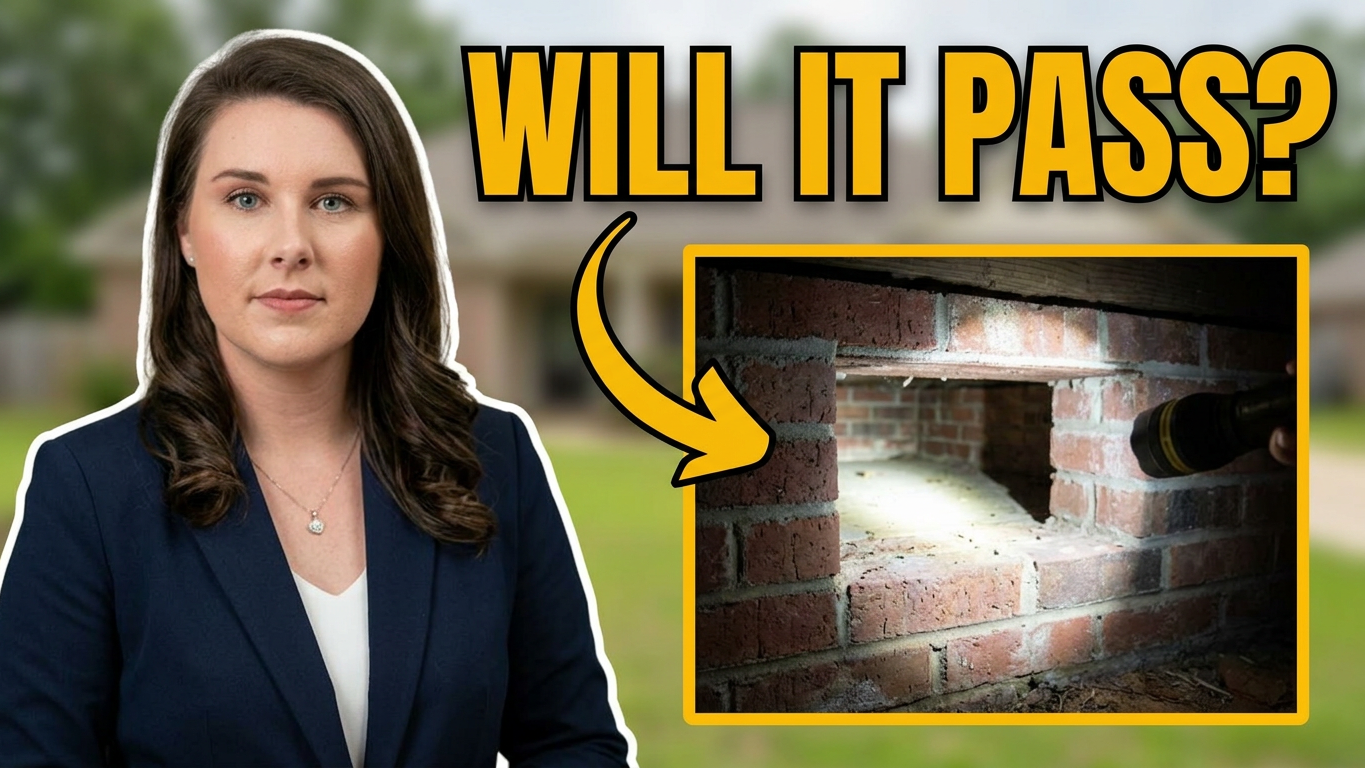
Crawlspaces deserve the same attention. If I see standing water, obvious moisture, damaged structural components, rot or other concerning conditions under a house, that matters to me before I ever start wondering whether VA will require a repair. A house can teach you a lot about itself from underneath the floor.
Drainage matters for the same reason. We get enough rain in South Alabama that I pay attention to where the water goes. A yard that consistently sends water toward the foundation, obvious erosion, chronic standing water or visible moisture damage deserves a closer look no matter what the loan program is.
Then there are termites.
VA specifically lists Alabama as a state where wood-destroying insect information is required statewide. Around here, that isn't surprising. Termites are a normal part of owning property in our climate, which is why the important questions are whether there's an active infestation, whether there's damage, what treatment has been done and what needs to be corrected.
If you're buying a home in South Alabama with VA financing, the termite portion of the transaction is something I expect us to handle properly from the beginning, not scramble over at the end.
Wells, Septic Systems, Pools, Stairs and Peeling Paint Aren't Automatic Deal Killers
These are the kinds of things that tend to generate the most bad VA advice, because somebody remembers one transaction where a condition became an issue and turns it into a universal rule.
Take septic systems and wells. Plenty of VA-financed homes have them. Once you get outside the more densely developed parts of Mobile and Baldwin counties, they become more and more common. Having a septic tank doesn't make a house unacceptable to VA, and neither does a private well. It simply means there are property-specific requirements we need to understand and, depending on the circumstances, testing or documentation that may be needed.
The same is true of swimming pools. A normal, working pool isn't incompatible with VA financing. A pool that's severely deteriorated or presents an obvious safety problem may need attention, but "it has a pool" isn't a VA problem.
Handrails are another favorite subject. Somewhere along the way, real estate developed a mythology that VA appraisers roam the country looking for stairs so they can demand handrails. The real issue is safety. Steps, a porch, a deck or an elevated area that presents a legitimate fall hazard may need correction. That's different from claiming VA has a universal rule requiring a railing beside every step on every property.
Peeling paint also needs context, especially on older homes. Deteriorated paint can matter because of lead-based paint concerns in homes built before 1978. If I'm showing a VA buyer an older house and see significant peeling, chipping or flaking paint, I'm going to flag it as something we may need to address.
That doesn't mean every scuff, paint chip or spot that needs a touch-up automatically becomes a VA repair.
The common thread through all of these is that the actual condition of the property matters more than the folklore around the loan.
"Will VA Require This Repair?" and "Should I Care About This?" Are Two Different Questions
This may be the most useful distinction I can give a buyer.
There are plenty of things I may care about enormously even if they never show up as a VA-required repair.
Say the HVAC system is twenty years old, working normally and doesn't create an appraisal condition. That doesn't mean I stop caring about it. I want my inspector looking at it, because replacing an HVAC system shortly after closing can be expensive.
The same goes for aging plumbing, electrical systems, water heaters, roofs, appliances, pools, drainage, insulation and dozens of other components.
A VA appraisal isn't an inspection, and VA says so explicitly. It recommends that buyers hire a qualified home inspector, because the appraisal doesn't guarantee the condition of the property.
This is one of the places buyers get themselves into trouble, by treating "passed VA" as though the federal government inspected the house and gave it a clean bill of health.
That isn't what happened.
The appraisal answered questions for the VA loan. The inspection answers questions for you, the person who's about to own the house.
I want both.
What Happens When the Appraiser Does Find Something?
Usually far less drama than people imagine.
If the appraiser identifies a condition that has to be corrected before the property meets VA requirements, the appraisal can be made subject to completing that repair. From there, we figure out what actually needs to happen.
Sometimes the seller agrees to fix it.
Sometimes we knew the issue was likely before writing the contract and already addressed who's responsible for it.
Sometimes more evaluation is needed before anyone knows the scope of the problem.
Occasionally, the condition is serious enough that the transaction simply doesn't make sense anymore.
What I don't want is everyone acting as though an appraisal repair automatically means a VA transaction has fallen apart.
If the issue is repairable and the parties can agree on how to handle it, we handle it.
That's also why I prefer dealing with obvious concerns before the appraisal. If there's rotten wood hanging off the back porch, an active leak through the ceiling, exposed unsafe wiring or significant peeling paint throughout a pre-1978 house, I don't need to wait for an appraiser to tell me those things deserve attention.
We can talk about them before the buyer commits to the property and structure the offer accordingly.
That's transaction management.
One Reason This Subject Is So Full of Bad Information Is That the Rules Change
VA updated its Minimum Property Requirements effective May 1, 2026, removing several outdated requirements that frequently caused appraisal delays or added costs. That means some of the training materials, checklists and "rules" still circulating were written before the current requirements took effect.
I think that's worth paying attention to.
I'm definitely not comfortable treating an agent's laminated "VA repair checklist" from ten years ago as gospel.
When we run into an unusual property condition, I'd rather check the current requirement than confidently repeat something that may no longer be accurate.
There are enough legitimate issues to solve in a real estate transaction without inventing extra ones.
So, Will the House Pass VA?
If you send me a listing and ask me that before we've seen the property, the right answer is that I can't know.
Even after walking through it, I'm not the VA appraiser, and I'm not going to pretend to be one.
What I can do is look at the house through the lens of more than a decade working with VA buyers and sellers and tell you what concerns me:
- If the roof is actively leaking, I care.
- If there's rotten structural wood, I care.
- If there's standing water under the house, I care.
- If the electrical system presents an obvious hazard, I care.
- If the plumbing doesn't work, I care.
- If a pre-1978 home has substantial deteriorated paint, I care.
- If there's evidence of active termite infestation or damage, I care.
- If the house has an unusual well, septic, access or drainage situation, I want to understand it.
If the kitchen cabinets are oak, the carpet is ugly, the bathroom tile is pink and the seller apparently stopped decorating sometime during the first Bush administration, I'm a lot less concerned.
That's the distinction I wish more buyers and sellers understood.
A VA loan isn't limited to pristine houses. You can buy an older house. You can buy a house that needs updating. You can buy a house you plan to improve over time. You can buy a house that's perfectly sound and still has plenty of things your home inspector thinks you should repair.
What we're trying to avoid are conditions that make the property unsafe, structurally unsound, unsanitary or otherwise unacceptable under the current VA property requirements.
After more than a decade in the Camp Lejeune market, I've watched excellent VA buyers lose opportunities because somebody on the other side of the transaction was unnecessarily afraid of the loan. I've also watched veterans become afraid of perfectly reasonable houses because someone told them VA would never approve the property.
I don't want either happening here.
If you're buying in South Alabama with a VA loan and find a house you love, don't rule it out because somebody points at one imperfect thing and declares, "VA won't allow that."
Let me and my team help you figure out what we're actually looking at.
If it's a legitimate VA issue, we deal with it.
If it's a legitimate house issue, even if VA doesn't care, we deal with that too.
And if the house is simply dated, worn or ugly?
VA finances ugly houses every day.
Sometimes ugly is where the opportunity is.
Wondering whether a house will pass VA?
Talk With Our Team About Buying With VACheck out this article next