Homeownership · South Alabama
Whole-House Generators in South Alabama: What Homeowners and Buyers Should Know
Why you see so many beside houses here, and what to ask before you buy one or a house that has one.
- Also called
- Standby generator
- Fuel
- Natural gas or propane
- Switches over
- Automatic transfer switch
- Service
- At least once a year
- Before you buy
- Ask what it powers
When I moved back home to South Alabama, one of the things I started noticing was how many houses have a whole-house generator sitting outside. Once you think about where we live, it makes perfect sense.
Hurricane season is part of life on the Gulf Coast. Severe thunderstorms happen, and so do power outages. When it's pushing 90 degrees with South Alabama humidity, losing electricity for a few hours is inconvenient. Losing it for a few days is an entirely different situation.

A whole-house generator definitely isn't a requirement for owning a home in South Alabama, but I understand the appeal a whole lot more now. If you're buying a home that already has one, thinking about adding one, or just wondering why you see so many around town, here's what you should know.
What Exactly Is a Whole-House Generator?
A whole-house generator, also called a standby generator, is permanently installed outside your home. Unlike a portable generator that has to be pulled out, fueled and connected by hand when the power goes out, a standby generator is designed to be ready all the time.
When the power goes out, the system detects the outage and the generator starts. An automatic transfer switch moves your home's electrical load from the utility to the generator. When utility power comes back, the system switches the house back.
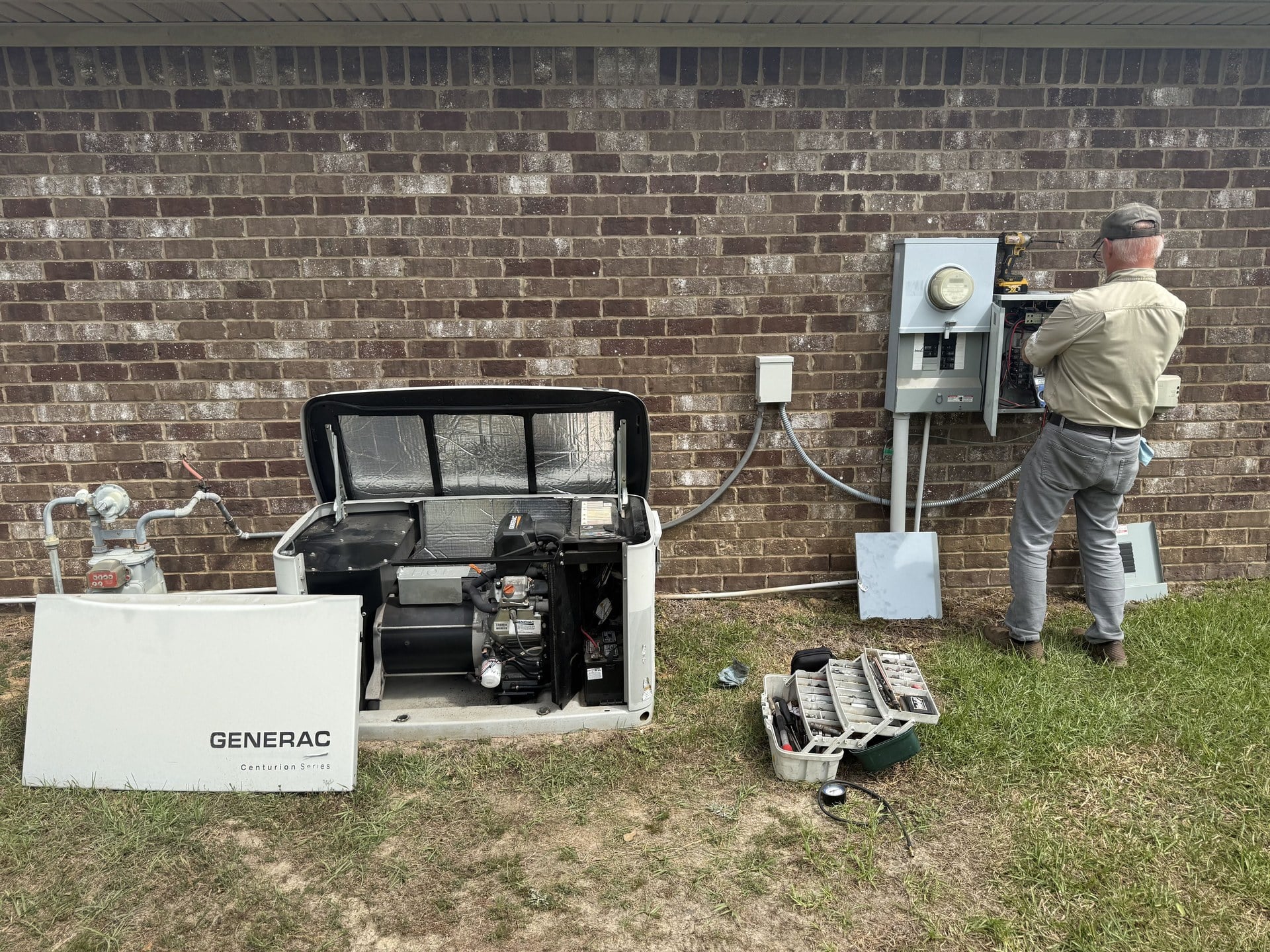
That's probably the biggest part of the appeal: you don't have to be home for it to work. If you're at work, out of town or asleep at 2:00 in the morning when the power goes out, the system takes over on its own. No going outside in terrible weather, no dragging a generator out of the garage, no extension cords running through the house, and no hunting for gasoline after half of town has already bought it. The house handles the outage for you.
Does a Whole-House Generator Really Power the Whole House?
Maybe. This is one of the first things I'd ask if I were buying a house with a generator already in place.
"Whole-house generator" doesn't necessarily mean everything in the house can run at the same time without limits. Generators come in different sizes, measured in kilowatts, and the power your home needs depends on much more than its square footage. Think about everything that could be running at once:
What could be running at once
- Central air conditioning, or multiple air conditioning systems
- Refrigerator and freezer
- Lights
- Water heater
- Washer and dryer
- Electric range and microwave
- Pool equipment
- Well or other pumps
- TVs and internet equipment
- Other major appliances
Some systems are sized to handle essentially the entire home. Others use load management equipment that prioritizes certain loads and keeps too many large appliances from running at the same time. Proper sizing looks at air conditioning, motorized appliances and load management, not just the size of the house.
So when a listing says "whole-house generator," my next question is: what exactly is this generator designed to power?
Most Standby Generators Run on Natural Gas or Propane
Many of the generators you see around South Alabama run on either natural gas or propane. Residential standby generators are commonly built for one of those fuels, and some models can be set up for either.
Natural gas. If your home already has natural gas service, a generator may be able to use that existing fuel source. The obvious appeal is that you aren't storing fuel at the house or refilling a tank during a long outage.
But there's an important catch. Having natural gas at the house doesn't automatically mean your gas system is ready for a generator. Generators use a lot of gas when they're running, so the gas line and meter need to be sized for the generator plus every other gas appliance in the home. Generator manufacturers call this out as part of installation and sizing, and it's something the installer and the gas provider need to evaluate.
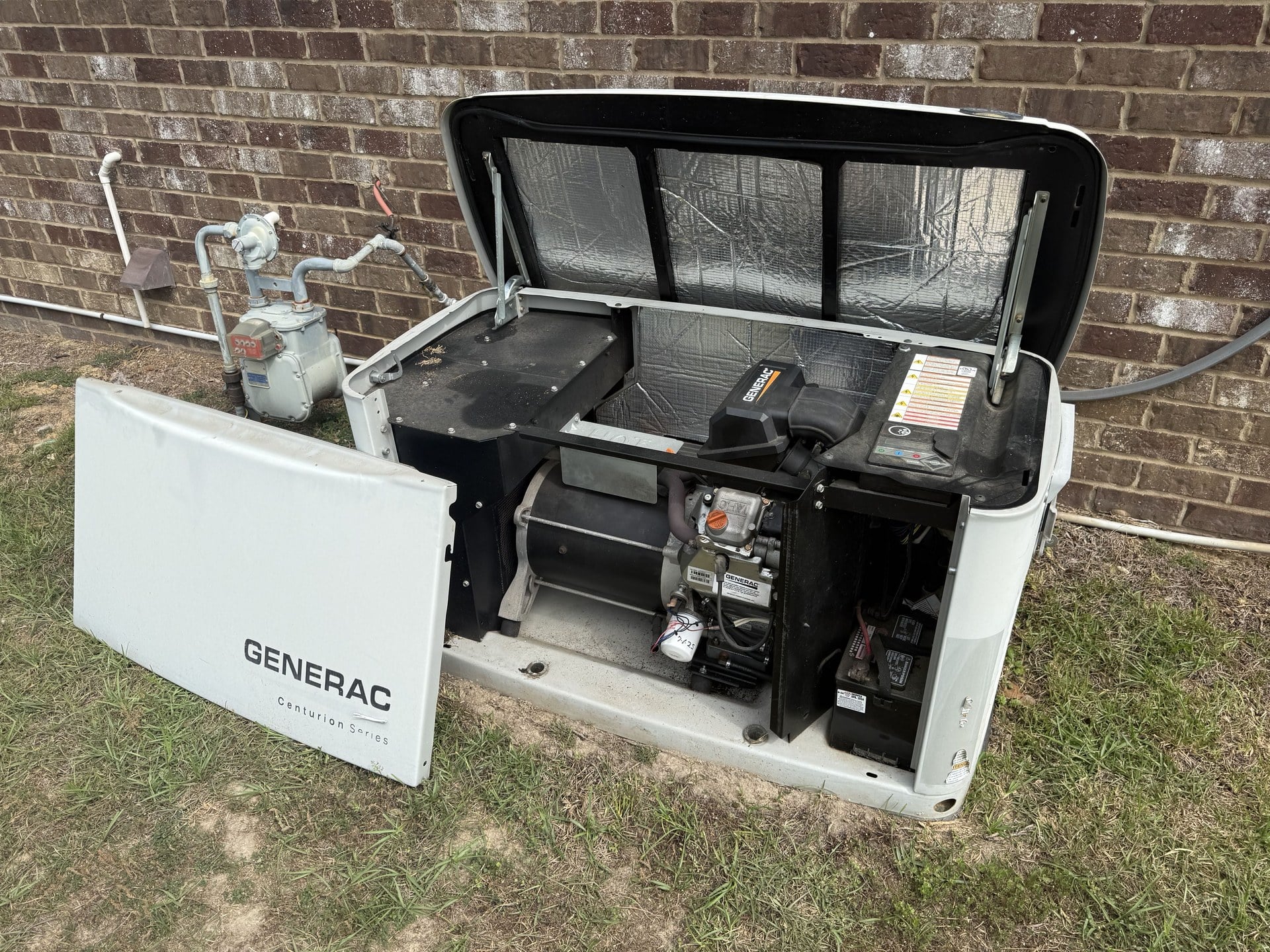
Propane. Propane is another option, especially for homes without natural gas service. Instead of relying on the utility's gas system, the generator pulls fuel from a propane tank on the property. The tradeoff is simple: your fuel supply is limited to what's in the tank. If you're planning for an extended outage, tank size and fuel level matter.
This Isn't an Appliance You Just Plug In
Installing a standby generator is a real home improvement project. Beyond the generator itself, a complete installation can involve:
A complete installation can involve
- A properly prepared location or generator pad
- An automatic transfer switch
- Electrical work
- Gas piping or propane connections
- Possible gas meter or fuel system changes
- Proper clearance from the house and its openings
- Permits and inspections
- Startup and testing
A generator installation often requires permits and inspections, and the requirements can depend on where you live and what the installation involves. If your home is inside city limits, that's usually your city's building department. If you're in an unincorporated part of the county, it's usually the county. Either way, contact your local building department before any work starts and confirm what's required. A good installer should know the process, but it's your house, so it's worth asking.
This is one project where I'd absolutely want qualified professionals handling the electrical and fuel connections.
How Much Generator Do You Need?
This isn't a question I'd answer with a square-footage calculator. A 2,500-square-foot home with gas heat, a gas range and a gas water heater can need very different power from a similar-size all-electric home with two air conditioning systems, an electric water heater and pool equipment. Proper sizing should look at the home's actual electrical demand.
Load management can also make a difference. Instead of a generator big enough to run every major load at once, some systems manage those loads and briefly keep certain high-demand appliances from running together.
If you're getting quotes, ask the installer: "What size are you recommending, why, and what will I be able to run during an outage?" I'd want a better answer than "This is what we normally put on houses this size."
What About Maintenance?
This is the side of generator ownership that doesn't get talked about nearly enough. A whole-house generator has an engine. It isn't something you install beside the house and ignore for ten years.
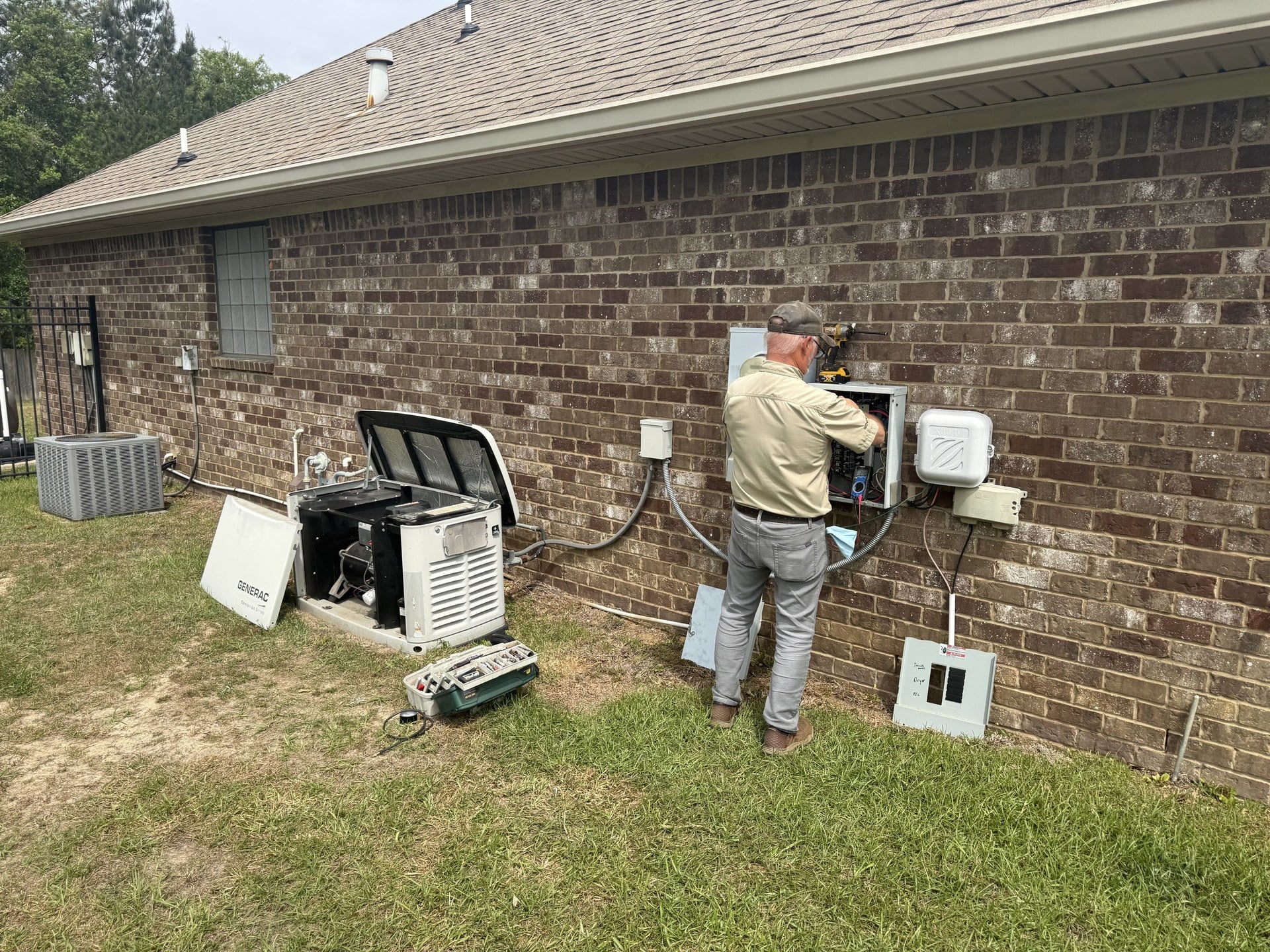
Depending on the make and model, routine maintenance can include:
Routine maintenance can include
- Checking the engine oil
- Changing the oil and oil filter
- Inspecting the battery
- Replacing the air filter
- Checking or replacing spark plugs
- Inspecting fuel connections and checking for leaks
- Clearing debris from the enclosure
- Testing the system
Manufacturer schedules vary, so the owner's manual for your specific generator is the rule to follow. Generac, for example, ties its service intervals to both time and operating hours, with oil changes, battery checks, air filter replacement and spark plug service at set run-hour milestones.
My practical rule: have the generator professionally serviced at least once a year, and know what the manufacturer requires for your model. If you're buying a house with an existing generator, find out who serviced it for the previous owner and when it was last done. If there are no maintenance records, I'd start fresh and have it serviced.
Yes, That Random Generator Noise Is Probably Normal
If you've ever walked through a neighborhood on a perfectly sunny day and suddenly heard someone's generator running, it may not mean their power is out. Standby generators are typically programmed to exercise themselves on a schedule, starting up and running for a short time to stay ready for a real outage.
The first time you own one, hearing it start up on a beautiful day might make you wonder what in the world is happening. It may just be doing exactly what it's supposed to do.
What Happens During a Long Power Outage?
This is important: automatic doesn't mean maintenance-free. If a generator runs continuously for days after a hurricane or major storm, you need to pay attention to operating hours and the manufacturer's requirements.
Generac's guidance for its air-cooled home standby generators is a good example. After every 24 hours of continuous operation, the generator should be shut down for at least 30 minutes so you can check and top off the oil, inspect the fuel lines and connections for leaks, and clear dirt and debris from the enclosure vents. More maintenance comes due as the run hours add up.
So if we had a major hurricane and your generator had been powering the house for several days, I wouldn't treat it like an invisible utility sitting outside. Know where the owner's manual is, how to check the operating hours, how to safely shut the unit down for service, and who you'll call if something isn't working right.
Buying a House in South Alabama That Already Has a Generator?
This is where my agent instincts kick in. A generator beside the house is great, but I wouldn't stop at "Oh good, this house has a Generac." I'd want to know more:
What I'd ask about an existing generator
- How old is the generator, and what's the make and model?
- How many kilowatts is it?
- Does it run on natural gas or propane?
- Is it designed to power the entire house, and does it use load management?
- When was it last serviced, and are maintenance records available?
- Who services it now?
- When was the battery last replaced?
- Can we confirm that it starts and runs?
- Was the installation permitted?
- Is any manufacturer's warranty still in effect?
- Is there an annual maintenance agreement?
- Is there a monitoring service or app connected to it?
Those answers tell you a lot more than seeing "generator" on the listing's feature sheet.

What I'd Do After Buying a House With One
If I bought a house tomorrow that already had a standby generator, I'd get the model and serial number, then the owner's manual for that specific unit. I'd ask the seller for every maintenance record they have and find out which local company has been servicing it. If I couldn't confirm it had been serviced recently, I'd schedule a baseline maintenance visit.
I'd also have someone walk me through the basics: where the controls are, how to see the operating hours, how the automatic transfer works, how to safely shut the generator down if needed, what the warning lights or notifications mean, and whether the system has remote monitoring.
The middle of a hurricane power outage is not when I want to learn how the equipment works.
If You're Thinking About Installing One
Get more than one quote, and make sure the quotes are actually comparable. Don't just compare the price of the generator. Ask whether each proposal includes:
Make sure each quote includes
- The generator
- The automatic transfer switch
- The pad
- Electrical installation
- Gas installation, including meter changes if needed
- Permits
- Startup and testing
- Warranty
- Initial maintenance
- Monitoring equipment or subscriptions
Ask what size unit they're proposing and why. A cheaper quote isn't really cheaper if one company included everything required and another didn't.
Are Whole-House Generators Worth It in South Alabama?
That's ultimately your decision. They aren't inexpensive, they need maintenance, they're one more mechanical system to own, and you may go long stretches without needing one.
But I understand the appeal. If the power goes out in August, the air conditioning matters. If we lose power for days after a hurricane, keeping the refrigerator and freezer running matters. So do charging phones, having lights and, often, having internet. And simply being able to keep living in your own house instead of immediately figuring out where you're going to stay has real value.
That's probably why, once you start looking, you realize whole-house generators are everywhere in South Alabama.
Another Thing I Learned After Moving Back Home
Moving back home has reminded me that understanding a place isn't just knowing where everything is. It's understanding how people actually live here. It's knowing which utilities you have to set up in person, why you make sure an adult is home when the gas gets connected, and why so many of your neighbors have a generator sitting beside the house.
Those are the little pieces of local knowledge that don't usually make it into a relocation brochure. They're also exactly what I want people moving to South Alabama to know.
Me and my team are building our Moving to South Alabama guides around the information we'd give a friend who was moving here: the practical stuff, the homeowner stuff, and the things somebody ought to tell you before you buy the house.
Buying a home in South Alabama?
Welcome home to South Alabama.
Talk With Our Team About Buying in South AlabamaCheck out this article next