Military Buyer Guide
You Can Use Your VA Loan More Than Once
How VA entitlement actually works when you've sold, kept or assumed a previous VA-financed home.
One of the most persistent misconceptions about VA loans is that once you use the benefit to buy a house, you've somehow "used up" your VA loan.
You haven't.
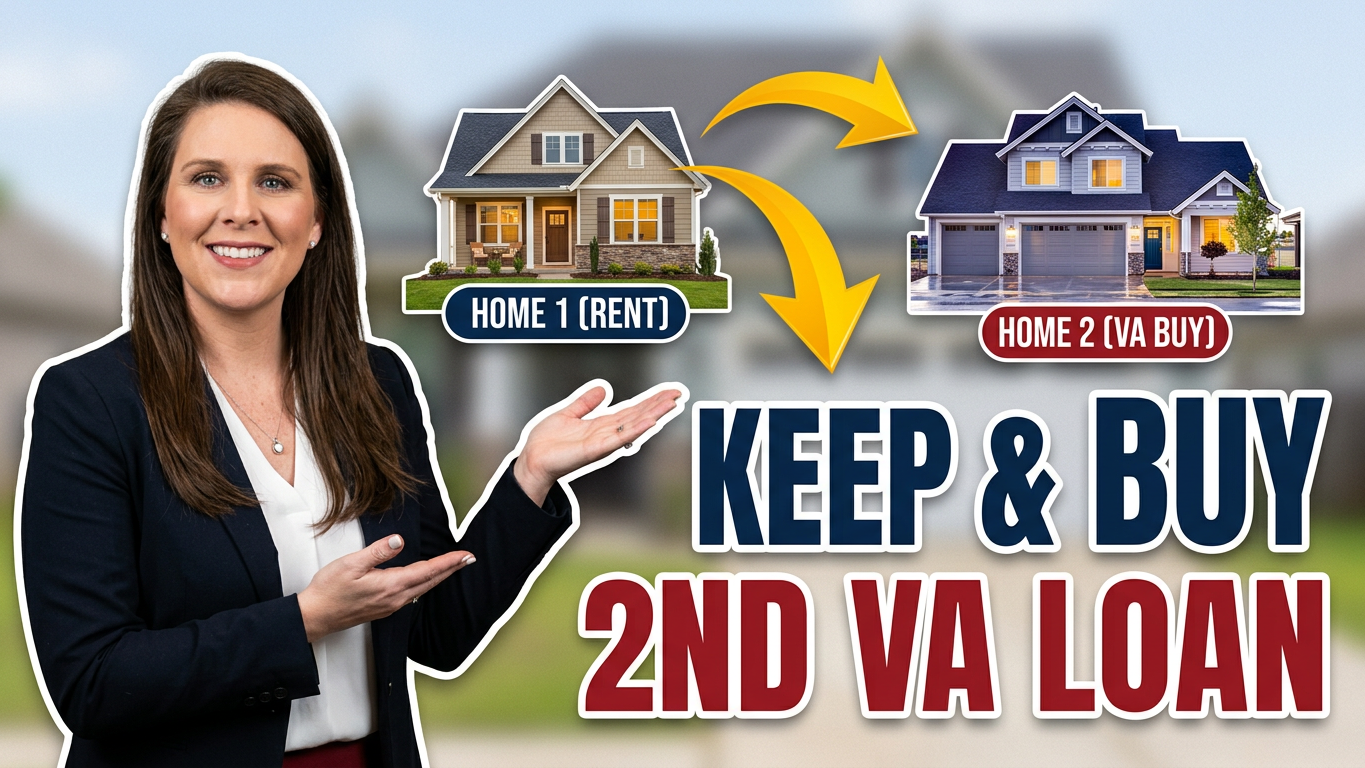
The VA home loan benefit is a lifetime benefit, and VA describes it as one you can use more than once. In many cases, a veteran can sell a home, have the entitlement restored and use VA again. In other situations, a veteran may even keep an existing VA-financed property and use remaining entitlement to buy another primary residence.
That last part surprises a lot of people.
I spent more than a decade working with military families around Camp Lejeune, where this situation came up constantly. Someone bought a house with VA financing at one duty station, got PCS orders, decided the property was worth keeping as a rental, and then assumed that meant VA financing was off the table for the next purchase.
Sometimes they absolutely could use VA again.
The question was never simply, "Have you used your VA loan before?"
The better question was, "How much VA entitlement do you have available now?"
That's where this starts making sense.
First, VA Entitlement Isn't a Pile of Money Waiting for You
The word "entitlement" confuses people, because it sounds like VA gives the veteran a certain dollar amount to spend on a house.
That isn't what it means.
Your VA entitlement represents the amount of the loan VA agrees to guarantee for the lender if the loan defaults. It's one of the reasons lenders are willing to make VA loans with features like no required down payment for qualified borrowers.
When you use a VA loan, some of your entitlement becomes tied to that mortgage.
When that entitlement is later restored, it can generally be used again.
If it hasn't been fully restored, you may still have remaining entitlement available.
That distinction is why "I already have a VA loan" doesn't give me enough information to tell you whether you can use VA for your next house.
I want to see the Certificate of Eligibility.
If You Sold the Previous House and Paid Off the VA Loan, This Is Usually the Easy Scenario
Say you bought a home with VA financing at your last duty station, later sold it, and the mortgage was paid in full at closing.
VA generally allows the entitlement used on that property to be restored so it can be used again.
That's why I don't think of VA financing as a first-time buyer program.
You might use VA to buy your first house at 25, sell it four years later, use VA again at the next duty station, sell that house when you separate, and use VA years later for another purchase.
The fact that you've used VA before isn't the problem.
What matters is what happened to the loan and the entitlement afterward.
One thing I wouldn't assume, though, is that everything has automatically updated exactly the way we expect. Before planning a purchase around VA financing, I want an updated Certificate of Eligibility showing where the entitlement stands.
That's much better than discovering an old loan is still showing up incorrectly after we're under contract.
Keeping the Old House Doesn't Automatically Take VA Off the Table
This is the scenario I think more military homeowners need to know about.
Imagine you bought a house with VA while stationed somewhere else. You get orders to Mobile, but your existing mortgage rate is excellent and the property would make a solid rental. You'd rather keep it than sell it.
A surprising number of veterans assume the next sentence has to be, "So I can't use VA again."
Not necessarily.
Veterans may, in some circumstances, have two active VA-backed home loans at the same time. If enough entitlement remains, the veteran can potentially use it toward another primary residence, as long as the new home meets VA's occupancy requirements and the borrower qualifies with the lender.
This is incredibly relevant to anyone making a PCS move, because military careers don't always cooperate with neat real estate timelines.
Maybe selling the old house right now would be financially foolish.
Maybe you bought when rates were dramatically lower.
Maybe the home rents extremely well.
Maybe you plan to return to that area eventually.
Maybe the local market is temporarily weak and you'd rather hold the property than sell just because orders arrived.
Those are all reasons I want to understand the entitlement before telling you what you "have" to do.
Keeping the house and using VA again may be possible.
It may also require a down payment, depending on how much entitlement remains and how much you want to borrow.
That's where the calculation becomes important.
Partial Entitlement Is Where People Get Lost
Veterans with full entitlement aren't subject to a VA county loan limit in the old sense. VA doesn't set a maximum dollar amount you can borrow simply because the loan is VA-backed. The lender still has to approve the loan based on income, debts, assets, credit standards and the property's value, but full entitlement itself doesn't impose a county-based cap.
County loan limits come back into play when some entitlement is already tied to another VA loan and hasn't been restored.
The lender looks at the amount of entitlement already charged to the existing loan, the county loan limit for the new property, and the amount of guaranty available for the next loan.
I don't expect the average buyer to sit at the kitchen table doing entitlement math.
That's what your lender is supposed to help figure out.
But I do want you to understand what the result means.
If enough entitlement remains to provide the guaranty the lender requires for the new loan, you may still be able to buy with no down payment.
If the available entitlement doesn't provide enough guaranty for the amount you want to borrow, the lender may require a down payment to make up part of the difference.
That doesn't mean you suddenly can't use VA.
It may simply mean this particular second-use scenario isn't a zero-down purchase.
There's a big difference between those two statements.
Here's the Kind of Situation I'd Want Calculated Before We Ever Shop for Houses
Say a Coast Guard member is moving to Mobile and still owns a VA-financed house from the previous duty station.
They owe $300,000 on the old loan, the mortgage has a great interest rate, and they'd like to keep it as a rental.
Now they want to buy a $450,000 home here.
I'm not going to tell them to sell the old house because "you can't have two VA loans."
I'm also not going to promise that the new $450,000 purchase will automatically be zero down.
I want:
- Their current Certificate of Eligibility
- The amount of entitlement charged to the existing loan
- The loan limit for the county where they plan to buy
- A lender who actually knows how to calculate remaining entitlement
Then we know.
Maybe they have enough remaining entitlement to buy the new home with no down payment.
Maybe they need $10,000 down.
Maybe they need substantially more.
Maybe conventional financing is worth comparing.
Those are decisions we can make once we have the actual numbers.
What I don't want is a veteran selling an excellent asset or abandoning the VA benefit because someone gave them a blanket answer that wasn't true.
There's Also a One-Time Restoration Option That Can Be Incredibly Useful
There's another situation veterans often don't know exists.
Say you previously used a VA loan, but instead of selling the property, you later paid that VA mortgage off in full, maybe because you refinanced the property into a conventional loan.
You still own the house.
VA allows a veteran to request restoration of the entitlement used on that property one time, even though the veteran hasn't sold the home.
That can be enormously useful for someone who wants to keep a prior property but free up VA entitlement for another purchase.
The phrase that matters, though, is "one time."
This isn't something I'd use casually without understanding the veteran's longer-term real estate plans.
Once that special restoration has been used, future restoration can be more restrictive. This is exactly the kind of situation where I want the veteran talking with a lender who understands VA and, when needed, with VA itself before we structure the next purchase.
Assumptions Can Affect Your Entitlement Long After You Sell the House
This is one reason our separate VA assumption guide matters.
If someone assumes your existing VA mortgage, selling the house doesn't necessarily mean the entitlement tied to that mortgage automatically comes back to you.
A qualified veteran who assumes the loan may be able to substitute their entitlement for yours. If that happens and VA's requirements are met, your previously used entitlement can be restored.
If the buyer assumes the mortgage without substituting entitlement, though, your entitlement may stay tied to that loan even though you no longer own the property.
That's a huge distinction for a veteran who expects to use VA again.
That's why I don't want anyone casually marketing a seller's 2.75% VA loan as an incredible assumable mortgage without also asking what the seller needs their VA entitlement to do next.
The buyer may love the old interest rate.
The seller may need that entitlement for the next house.
Both things matter.
A Previous Foreclosure Doesn't Necessarily Mean Your VA Benefit Is Gone Forever
This is another area where I'd be careful about blanket statements.
If VA suffered a loss because it had to pay a guaranty claim on a previous loan, that can affect how much entitlement remains. Entitlement used on a loan involving a VA loss generally can't be restored until that loss has been repaid in full.
That doesn't necessarily mean the veteran can never use VA financing again.
There may be remaining entitlement, and eligibility for another loan also depends on the veteran meeting the VA and lender requirements for the new transaction.
This is a situation where I'd want the COE and the lender involved very early, instead of trying to guess based on what happened years ago.
The Certificate of Eligibility tells us far more than the sentence "I had a foreclosure."
You Still Have to Qualify for the Second Loan
Having entitlement available is only one piece of the transaction.
VA entitlement isn't an approval.
The lender still has to decide that you qualify for the mortgage based on your income, debts, credit, assets and other underwriting requirements. The new property also has to meet VA's occupancy rules, which generally means the home you're buying is intended to be your primary residence, not a vacation property or pure investment purchase.
If you're keeping another home, that mortgage doesn't simply disappear from the qualification process because a tenant is living there.
Depending on the circumstances, rental income may help offset some of the obligation, but the lender still has to underwrite your entire financial picture.
This is especially important for military buyers who already own one or two properties.
Being able to use VA again and being financially comfortable owning multiple houses aren't necessarily the same thing.
I care about both.
Sometimes the Smartest Decision Is to Keep the Old House. Sometimes It Absolutely Isn't.
Military homeowners are often encouraged to turn every prior duty-station house into a rental.
I don't believe in doing that automatically.
If you own a house with an exceptionally low mortgage rate, strong rental demand, healthy cash flow and enough reserves to handle repairs and vacancies, keeping it may turn out to be one of the better long-term financial decisions you make.
If the property barely covers its expenses, needs substantial deferred maintenance, is hundreds of miles away and leaves you with very little financial flexibility for your next purchase, selling may make much more sense.
Remaining VA entitlement gives us another option.
It doesn't make the decision for us.
That's the distinction I want military buyers to understand.
VA gives you tremendous flexibility. Our job is to figure out whether using that flexibility actually improves your financial position.
Before You Tell Me You've Already "Used Your VA Loan," Let Me See the COE
This is probably the simplest takeaway from the entire article.
If you've used VA financing before and are thinking about another purchase, don't assume anything based solely on the fact that you have or had a VA mortgage.
Pull an updated Certificate of Eligibility.
Let's see what entitlement was charged, what's been restored and what's still available:
- If you sold the previous property and paid the loan off, restoration may be straightforward.
- If you still own the property and still have the VA mortgage, remaining entitlement may allow another VA purchase.
- If the prior VA loan was paid off but you kept the property, a one-time restoration may be available.
- If another veteran assumed your previous mortgage and substituted entitlement, yours may have been restored.
- If an old VA loan resulted in a loss, we need to understand how that affected the entitlement that remains.
None of those questions are answered by asking, "Have you ever used VA before?"
After more than a decade working with military families, I've seen too many veterans make decisions based on the assumption that the benefit was gone when it wasn't.
The VA home loan isn't a coupon you redeem once.
It's a lifetime benefit that can follow you through PCS moves, career changes, retirement and multiple home purchases.
Sometimes you'll sell one VA-financed house and use the benefit again on the next.
Sometimes you'll keep the first house and use remaining entitlement.
Sometimes a down payment will be necessary.
Sometimes we'll look at the VA option and decide another loan makes more sense.
But I want to make that decision from your actual entitlement and actual numbers, not from a myth.
If you're buying in South Alabama and have used your VA benefit before, talk with me and my team before you assume it's no longer available.
You may have considerably more buying power left than you think.
Used VA before? Let's look at your COE.
Talk With Our Team About Your VA EntitlementCheck out this article next