Military Buyer Guide
VA Loans Can Be 0% Down, but You May Still Need Cash
Where money may still be needed between contract and closing, and how to plan for it.
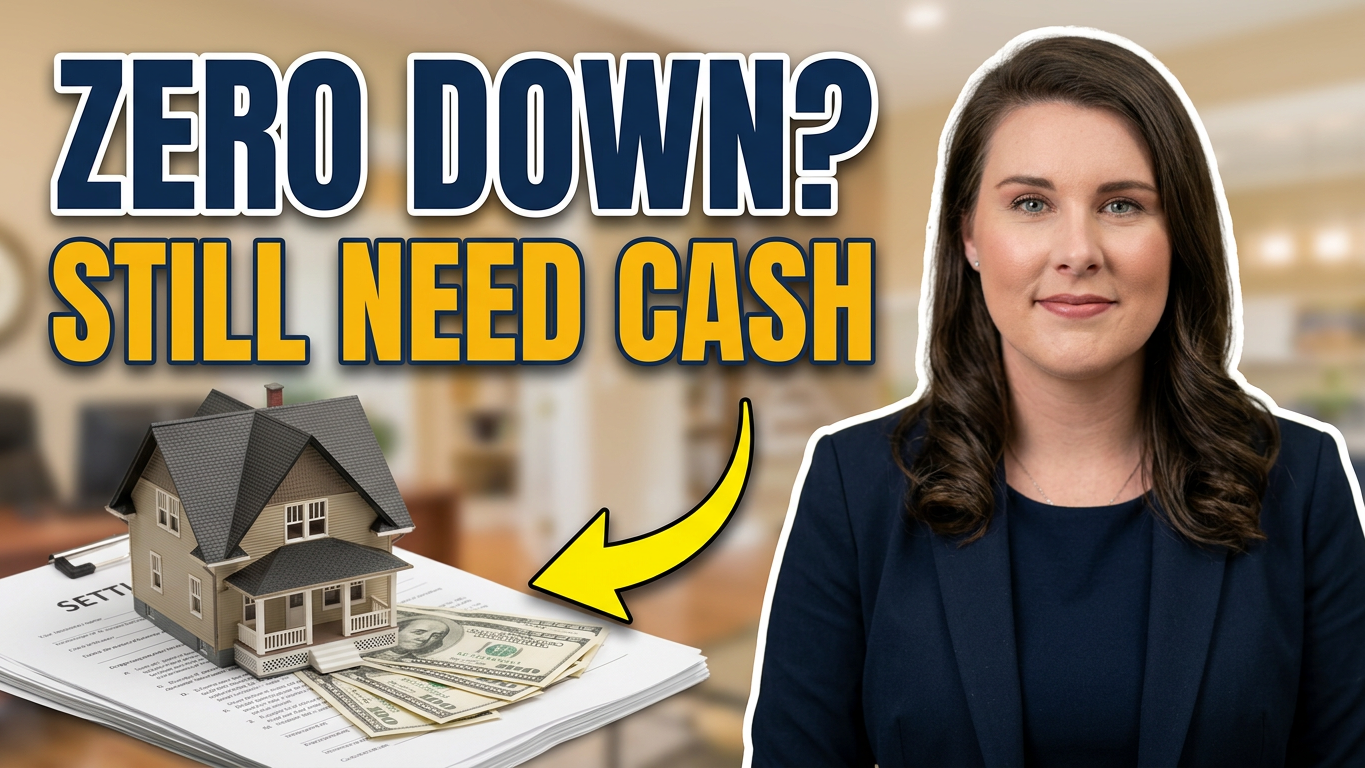
One of the first questions VA buyers ask me is, "If I can buy with zero down, why do I still need money?"
Because the down payment is only one part of the transaction.
A VA loan can allow an eligible buyer to finance 100% of the purchase price, but there are still costs involved in getting from contract to closing. Some are true closing costs. Some are prepaid expenses. Some are inspections and other costs you pay along the way. Depending on the transaction, some of those expenses may be paid by the seller, offset by lender credits or reduced through builder incentives.
The important thing is not to confuse zero down with zero cash needed.
That distinction matters because the VA benefit is still one of the strongest financing tools available to eligible buyers. I just want veterans to understand exactly where money may be needed, so they aren't surprised halfway through the process.
A Down Payment and Closing Costs Aren't the Same Thing
A down payment is the portion of the purchase price the buyer pays out of pocket instead of financing.
With VA financing, an eligible borrower may be able to buy with no required down payment at all.
Closing costs are different. They're the expenses required to put the transaction together, complete the mortgage and transfer the property.
Those costs can include lender fees, title and settlement charges, appraisal fees, recording fees and other costs tied to the loan and the closing.
Then there are prepaid expenses, which buyers often lump into "closing costs" even though they aren't really fees in the same sense.
For example, your lender may collect money for homeowners insurance, property taxes or prepaid interest. That money isn't necessarily paying someone for a service. In many cases, it's being collected in advance because those bills will eventually need to be paid.
So when a lender tells you your VA loan has no down payment, that doesn't mean all of those other costs disappear.
Some Money May Be Needed Before Closing
You may also spend money during the transaction before you ever reach the closing table.
One of the first things that may come up is earnest money. This is a deposit made after your offer is accepted to show you're serious about completing the purchase. It isn't an extra charge added to the price of the house. Assuming the transaction closes normally, that money is generally credited back to you in the final closing figures.
Then there are inspections.
I strongly recommend an independent home inspection for VA buyers, because the VA appraisal isn't a home inspection. Depending on the property, you may also choose additional inspections for things like a pool, septic system, well, roof or another specific feature.
Those costs are usually paid during the transaction, which is one of the reasons I want VA buyers to have some cash available even if the loan itself requires no down payment.
Homeowners Insurance Can Affect Both Your Cash to Close and Your Monthly Payment
In South Alabama, homeowners insurance needs to be part of the conversation early.
The lender will generally require a homeowners policy to be in place before the loan can close. Depending on how the mortgage is structured, you may need to pay an initial insurance premium and fund part of an escrow account for future insurance and tax bills.
That's one of the reasons I don't want buyers waiting until the very end of the transaction to get insurance quotes.
The cost of insurance affects the monthly payment, and the amount collected for insurance can also affect the cash you need at closing.
In our market, things like roof age, wind coverage, hurricane deductibles, FORTIFIED construction and the specific property itself can make a meaningful difference.
The VA Funding Fee Is Another Piece of the Puzzle
Most VA borrowers pay a VA funding fee, which helps support the home loan program.
The funding fee is different from ordinary closing costs, because it can generally be financed into the mortgage instead of being paid in cash at closing.
Some veterans are exempt from the funding fee, including veterans receiving VA compensation for a service-connected disability.
That can make a significant difference in the overall cost of the loan, so I want the lender verifying the veteran's funding fee status instead of making assumptions about it.
The Seller May Be Able to Help With Some of Your Costs
This is another reason I don't like giving buyers a blanket answer about how much money they "need" before we know the details of the transaction.
In a VA purchase, the seller may be able to pay certain buyer closing costs, and VA also allows certain seller concessions within its rules.
Those aren't exactly the same thing, even though people often talk about them as if they are.
The practical point for the buyer is simple: some of the money you'd otherwise need at closing may be negotiable.
Depending on the property and the market, we may be able to negotiate for the seller to help with closing costs. In a new construction purchase, the builder may also offer incentives that reduce the cash you need.
That doesn't mean every buyer should automatically ask for the maximum possible seller contribution.
Sometimes the better negotiation is a lower price. Sometimes it's closing cost help. Sometimes it's using available credits to improve the interest rate.
The right answer depends on the transaction.
So How Much Cash Should a VA Buyer Actually Expect to Need?
There's no honest one-size-fits-all answer.
Your cash requirement can change based on:
- The home price
- Insurance costs
- Property taxes
- Lender fees
- Inspections
- Earnest money
- Seller contributions
- Lender credits
- Builder incentives
- Whether you're exempt from the VA funding fee
That's why the most useful number isn't something you find in a generic online article.
It's the number on your actual Loan Estimate and, later, your Closing Disclosure.
Those documents tell you what your loan costs, what credits are being applied and how much cash you're expected to bring to closing.
Your lender should be able to explain those numbers clearly. If they can't, keep asking questions until they do.
Zero Down Is Really About Flexibility
This is the part of the VA benefit I wish more buyers appreciated.
The ability to buy with no required down payment doesn't mean the goal should be to reach closing with every dollar gone.
For many veterans, the real strength of zero-down financing is that it lets them preserve cash.
That money may be more useful sitting in an emergency fund, covering moving expenses, handling improvements after closing, or simply giving you more breathing room during a PCS.
Buying a home almost always comes with expenses after you get the keys. Something will need to be repaired. Something will need to be bought. Something will cost more than expected.
I'd much rather see a buyer close on a home with healthy reserves than spend every available dollar just because they technically could.
So yes, a VA loan can allow you to buy with no down payment.
But that doesn't mean buying a home costs nothing.
The better way to think about it is that VA financing may let you avoid tying up a large amount of cash in a down payment, while you still budget realistically for the costs of the transaction and the costs of homeownership that come after it.
That's a much more useful way to use the benefit.
If you're planning a VA purchase in South Alabama, me and my team are happy to help you map out what to expect before you're under contract.
Planning a VA purchase?
Talk With Our Team About Buying With VACheck out this article next