Pools · South Alabama
Buying a House With a Pool? Get the Pool Inspected Before It Becomes Your Problem
The blue water is the least informative part of the pool. Here's what an inspection tells you, and what it doesn't.
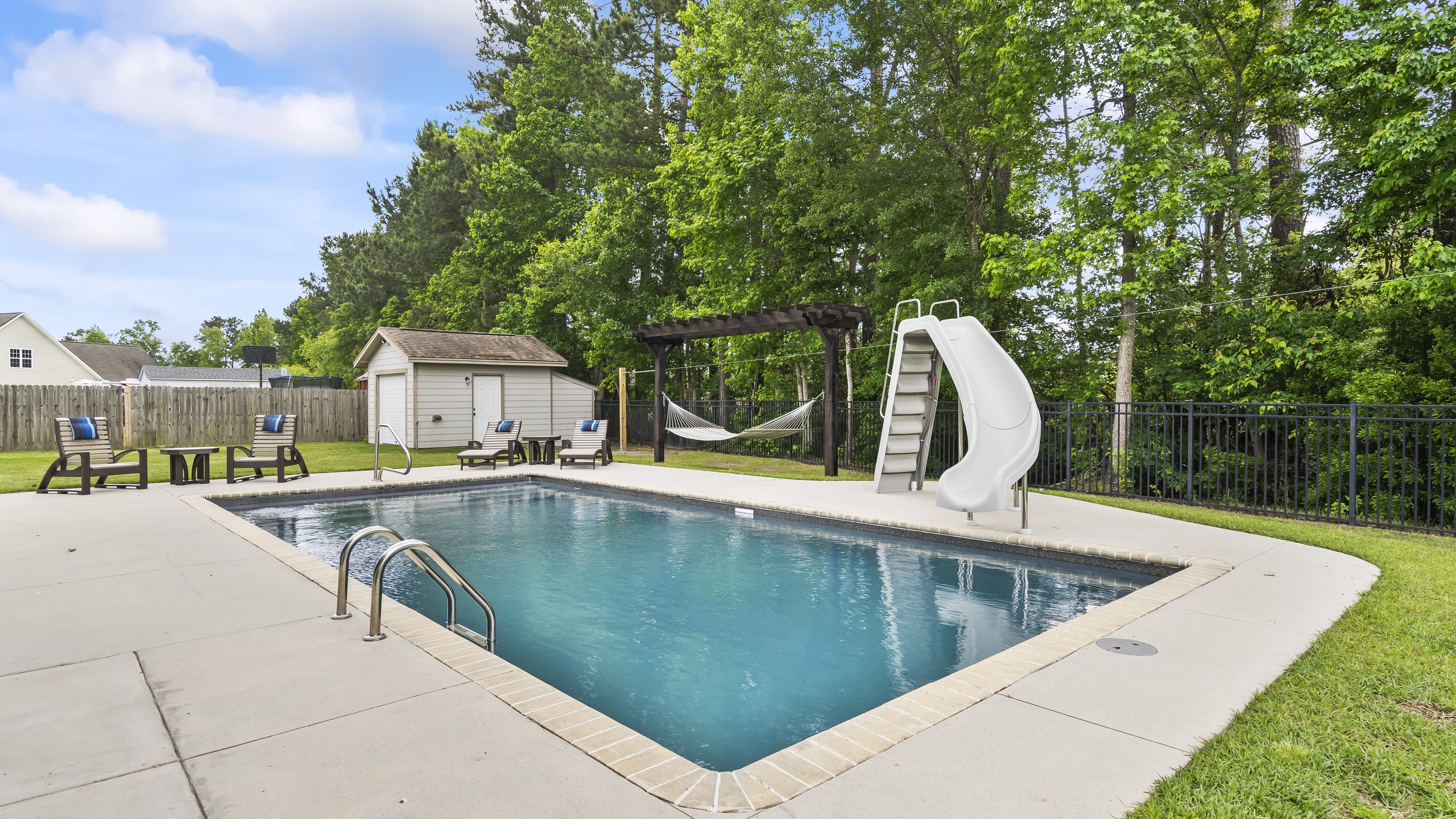
- Standard
- ASHI pool and spa standards
- Scope
- Visual, accessible parts
- Not covered
- Leaks, underground parts, codes
- Inspection day
- Pool full, equipment on
- Safety
- Barriers and gates
I love swimming pools enough that I'm probably more likely than most people to get distracted by one when I'm looking at a house.
Give me pretty blue water, a good backyard and a place to sit around the pool, and I'm already picturing summer.
But I've also owned enough pools to know that the blue water is the least informative part of what I'm looking at.
A seller can make the water sparkle before the photographer arrives. The pump can be running. The waterfall can be turned on. Everything can look exactly like the backyard you've been hoping to find.
None of that tells you what condition the pool is actually in.
If you're buying a house with a swimming pool in South Alabama, have the pool inspected.
Not because pools are problems. I clearly don't believe that. Have it inspected because you're buying another major system with the house, and you deserve to understand that system before it belongs to you.
The goal isn't to have someone promise you nothing will ever break.
The goal is to answer a much more useful question:
What exactly am I buying?
A Pool Inspection Isn't Just Somebody Looking at the Water
This is where I think buyers need to understand what they're paying for.
A meaningful pool inspection should go well beyond whether the water is clear and the pump turns on.
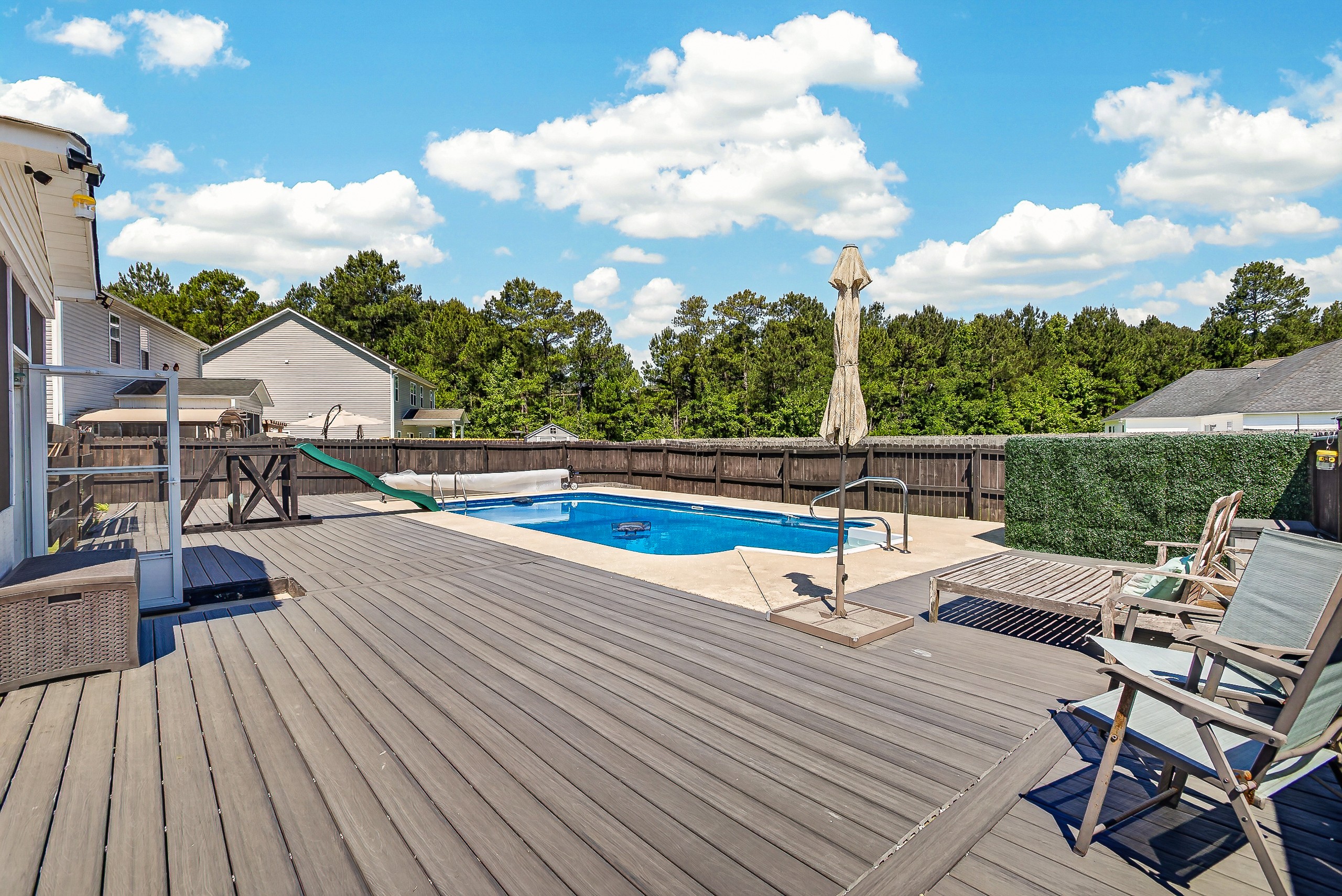
The American Society of Home Inspectors (ASHI) has residential pool and spa standards that call for an inspector working under them to examine readily accessible, visible components, including the interior finish, decking, coping, pumps, motors, filters, drains, heaters, visible piping and valves, accessible electrical components, GFCI protection, bonding, lights, ladders, safety barriers and certain entrapment-prevention components. The standards also cover vegetation, grading and surface drainage that could adversely affect the pool.
That's a lot happening around one body of water.
And it's why I'd never assume that having the house inspected automatically means the pool got the level of attention I want.
Some home inspectors offer pool inspections. Some have substantial experience with pools. Some companies have an inspector who specializes in them. In other cases, I may want an actual pool professional involved.
I'm less interested in the title on the business card than in knowing exactly what they're going to inspect.
Before the inspection, I want to know the scope:
Ask about the inspection's scope
- Are they evaluating the pool surface?
- The equipment?
- The heater?
- The visible plumbing?
- The electrical components?
- The deck and coping?
- The safety barriers?
If the answer is that they're simply going to turn the pump on and make a few general observations, that may not be enough information for me.
Just as Important: Know What the Inspection Doesn't Tell You
This may be the most important part of the whole conversation.
A normal pool inspection is generally a visual, non-invasive inspection of accessible components. It isn't the same thing as hiring every possible pool specialist to run every possible diagnostic test.
ASHI's pool standards are very clear about this. An inspection under those standards is done by an inspection generalist, not a technical specialist. It doesn't determine structural integrity, guarantee the pool is free from leaks, inspect underground components, predict when equipment will fail, determine repair costs or confirm that the pool complies with current building codes.
I actually think knowing those limits makes the inspection more useful, not less.
Because now we know what to do with the information.
If the pool inspector sees something that makes them suspect a leak, we don't say, "Well, we already had a pool inspection."
We bring in someone who does leak detection.
If there's cracking or movement that raises a structural concern, that may call for someone with expertise beyond a general pool inspection.
If there's an electrical concern, I may want an electrician.
If there's a piece of equipment the inspector can't properly evaluate, we may need a pool equipment technician.
The first inspection is the screening.
Sometimes it tells us everything we reasonably need to know.
Sometimes it tells us which question we need to ask next.
Make Sure the Pool Can Actually Be Inspected
This sounds painfully obvious until everyone shows up and discovers something important is turned off.
If we expect the inspector to evaluate operating equipment, I want the pool full, accessible and running.
If there's a heater that runs on natural gas or propane, I want that fuel service available if we expect the heater to be evaluated.
If equipment has been shut down, locked out or disconnected, that needs to be addressed before inspection day if possible.
ASHI's standards specifically say an inspector isn't required to inspect equipment that's shut down or won't respond to normal controls, including equipment that can't run because a required energy source like electricity or gas isn't available.
That matters.
If the listing says the house has a heated pool, "We couldn't test the heater because the gas was off" leaves me with an unanswered question about a potentially expensive piece of equipment.
I'd rather answer that question before closing than discover the answer in November when the new homeowner tries to turn the heater on.
The same goes for lights, automation, pumps and other features.
If it's supposed to work, I'd like to see it work.
The Inspection Changes Depending on the Pool You're Buying
We've already talked about gunite, fiberglass and vinyl pools, and this is where knowing what type of pool you have becomes practical.
If I'm buying a gunite pool, I'm paying particular attention to the interior finish. I want to understand its condition and, if possible, when it was last resurfaced. An older gunite pool doesn't bother me if it's been maintained. A pool with an unknown history and a finish that may be approaching a significant renovation deserves more investigation.
If I'm buying a vinyl-liner pool, I want the liner looked at carefully, and I want to know its age if the seller has that information. A liner is ultimately a replaceable component. I don't need it to be brand new, but I'd rather know whether replacement may be around the corner.
With fiberglass, I want the shell and finish evaluated, along with the decking and surrounding area, for signs that deserve a closer look.
Then, no matter what the pool itself is made of, we get to the equipment:
Equipment checks for any pool
- How is the pump doing?
- What kind of filter is there?
- Does the heater work?
- If it's saltwater, what condition is the salt system in?
- Do the lights work?
- Does the automation actually run the equipment it's supposed to control?
- Are there visible plumbing leaks?
- What does the equipment pad look like?
One of the things I've learned from owning pools is that the part you stare at all summer isn't necessarily the part most likely to hand you a repair bill.
Sometimes the least attractive corner of the backyard is where the most important information lives.
This Is Also the Time to Learn the Pool's History
The inspection tells me what someone can observe today.
The seller may be able to tell me how we got here.
I want to know who maintains the pool.
If a professional company has been servicing it, I want their name. When we bought our current house, the previous owner already had someone maintaining the pool, and we kept them. That was incredibly helpful, because they already knew the equipment and the pool's history.
I'd also ask the seller what they know about major repairs and replacements:
Repair history to ask the seller about
- When was the pump replaced?
- Has the pool ever had a known leak?
- If it's gunite, has it been resurfaced?
- If it's vinyl, when was the liner replaced?
- If there's a heater, has it needed repairs?
- If it's saltwater, has the salt cell been replaced?
If they have receipts or service records, even better.
I'm not expecting a perfectly documented medical chart for the swimming pool.
I'm trying to establish a history.
There's a big difference between buying a 15-year-old pool whose owner can explain how it's been maintained and buying a 15-year-old pool nobody seems to know anything about.
The first one is older.
The second one is a mystery.
I worry much more about mysteries.
Leaks Deserve Their Own Conversation
Pools lose water naturally through evaporation, splash-out and normal use.
That doesn't mean every pool that needs water added has a leak.
It also doesn't mean a standard pool inspection proves there isn't one.
This is one of the limits buyers should understand. ASHI's standard specifically says the inspector isn't required to determine whether the pool or its components are free from leakage, and underground components are outside the normal scope.
So if something raises a concern during the inspection, like signs of unusual water loss, suspicious cracking, evidence of prior plumbing work or another condition the inspector can't fully explain, I'd rather investigate while we're still in due diligence.
That may mean specialized leak detection.
I don't want to turn every imperfection into an emergency, but I also don't want to close with a legitimate unanswered question just because answering it takes a second phone call.
I Care About the Electricity Around the Pool
This is one place where I have very little appetite for "it's probably fine."
Water and electricity live awfully close together around a swimming pool.
That's why professional inspection standards include visible electrical components, GFCI devices, lights and external bonding among the items an inspector may evaluate.
I don't expect a pool inspector to become an electrical engineer.
I do expect them to identify visible conditions that need attention and tell us when something should be evaluated further by an electrician.
A broken pool light is one thing.
A concern involving electrical safety around water is something else.
This is one of the places where the inspection earns its money, even if the pool itself turns out to be in beautiful condition.
Look Outside the Pool, Too
I want the inspector looking around the water, not only into it.
The decking matters.
The coping matters.
Drainage matters enormously in South Alabama.
We can get a staggering amount of rain very quickly, and where that water goes can matter to both the pool and the house. ASHI specifically includes grading, surface drainage, vegetation and retaining walls likely to adversely affect the pool among the items covered by its standard.
This is also where I start looking at how the backyard is going to behave after you own it:
Around the pool
- Do giant trees hang directly over the pool?
- Has the decking settled?
- Does water seem to drain toward the pool or away from it?
- How does water move between the pool area and the house?
None of those things automatically makes the property undesirable.
They're simply part of understanding the whole backyard you're buying.
Safety Isn't an Afterthought
I believe strongly that kids who grow up around water should learn to swim and develop water confidence.
I also believe a swimming pool deserves respect every single day, whether anyone plans to swim or not.
When I'm looking at a pool property with a buyer, I want to understand how someone gets from the house to the water:
Safety questions
- What kind of barrier exists?
- How do the gates operate?
- Could a small child leave the house and reach the pool?
- What additional protections would the buyer want?
Current CDC guidance recommends a four-sided fence at least four feet high that fully encloses the pool and separates it from the house, with self-closing and self-latching gates. The Consumer Product Safety Commission likewise recommends layers of protection and notes that when the house itself forms part of the pool barrier, door alarms or other safeguards can add protection.
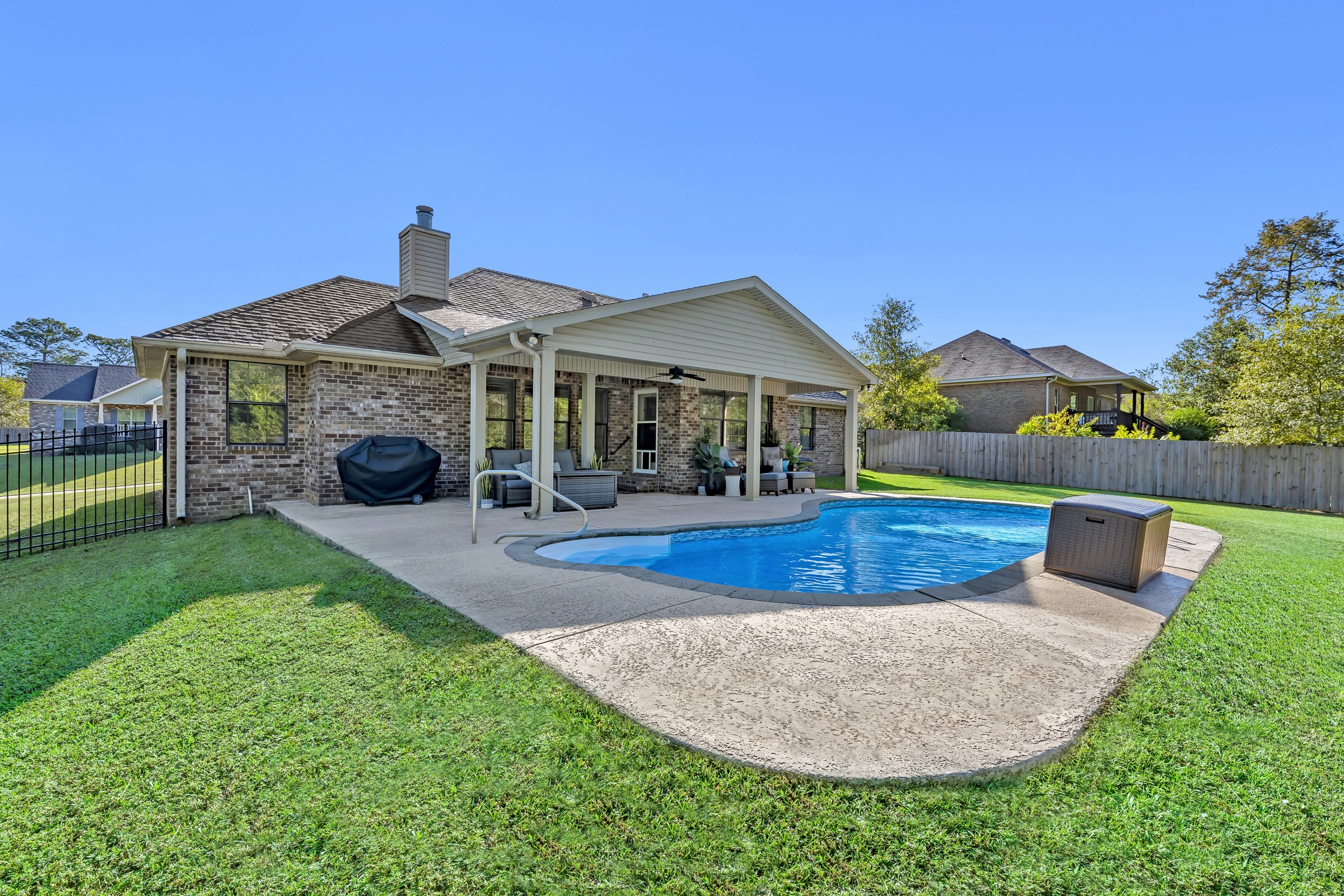
That doesn't mean I walk into every older home and declare the pool defective because it doesn't match today's ideal safety setup.
It means I want the buyer to understand the existing setup before closing.
Different buyers will look at the same setup very differently, depending on who lives in and visits the home.
The house doesn't change.
The people using it do.
The Inspection Report Isn't Just Ammunition for Negotiations
This is another place where I think buyers sometimes miss half the value of an inspection.
Yes, sometimes a pool inspection uncovers a significant problem, and that information becomes relevant to the transaction.
But the inspection isn't valuable only if we find something to ask the seller to repair.
Sometimes the best report is wonderfully boring.
The pool is functioning.
The equipment is operating.
The surface is in reasonable condition.
There are a few maintenance items.
The pump is older but working.
The inspector recommends having one component serviced.
Great.
You just learned a tremendous amount about a part of your new house.
Keep that report.
It becomes your baseline.
On the day you take ownership, you know what equipment was there, what was working, what concerns existed and what someone recommended keeping an eye on.
If you maintain the pool well from that point forward, you've just started your own maintenance history.
That's useful information even if the seller never repairs a single thing.
What I Actually Want From a Pool Inspection
I'm not asking the inspector to see the future.
I don't expect them to tell me exactly how many summers are left in a pump.
I don't expect them to guarantee that an underground pipe will never leak.
I don't expect them to promise that nothing expensive will ever happen.
Houses don't work that way, and neither do swimming pools.
What I want is a baseline:
What a good inspection tells you
- What kind of pool am I buying?
- What condition is it in today?
- What works?
- What doesn't?
- What couldn't be evaluated?
- What looks like normal maintenance?
- What deserves further investigation?
And, based on everything we can reasonably learn before closing, is there a major expense sitting in this backyard that the buyer should understand before the property becomes theirs?
That's the value of the inspection.
I'm still going to be the person telling you a swimming pool can be one of the very best parts of owning a house in South Alabama.
I'm still going to picture everybody in the water, the grill going and the whole backyard full.
I just want you to enjoy all of that with some idea of what's humming away at the equipment pad behind you.
The pool should be part of what makes you excited to buy the house.
The inspection helps make sure you know what comes with it.
Buying a house with a pool?
If you're buying a house with a pool and want help lining up the right inspections, me and my team are happy to walk you through it.
Talk With Our Team About Buying in South AlabamaCheck out this article next